

Playground Equipment Shipping from China: 40HQ Container Loading Guide
Playground Equipment Shipping from China: 40HQ Container Loading Guide
Play equipment shipping from China is a volume game: a 40HQ container holds roughly 68 CBM of cargo, and most export loads are planned around that number. Method: measure every carton, convert to cubic meters, total the order, keep 5–8% free for dunnage and loading gaps, and get a written stuffing plan before the container is sealed. Play equipment is bulky but light, so the cubic meter is the number your forwarder, your budget and your 40HQ all speak in.
1. Start with the right container
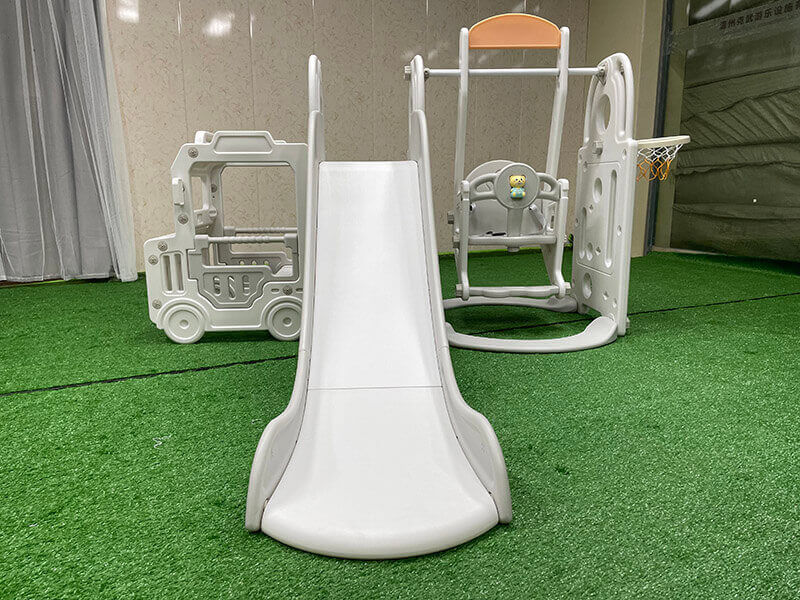
Play equipment is sold by volume, not weight, so the container choice drives the quote. The 40-foot high-cube (40HQ) is the workhorse for slides, playpens, swings and combos — its taller interior fits high-stacked cartons better than a standard 40GP. Keep 20GP for samples and small trials.
| Container | Interior (L x W x H) | Practical capacity | Approx. max payload |
|---|---|---|---|
| 20GP | 5.90 x 2.35 x 2.39 m | ~28 CBM | ~28 t |
| 40GP | 12.03 x 2.35 x 2.39 m | ~58 CBM | ~26 t |
| 40HQ | 12.03 x 2.35 x 2.69 m | ~66–68 CBM | ~26 t |
2. Do the CBM math yourself
CBM is length x width x height in meters per carton, times the number of cartons. The table shows worked examples. Whatever you buy, reserve 5–8% for dunnage and loading gaps — plan on about 90% of the theoretical maximum — and never rely on a supplier’s casual estimate: ask for the carton list per model and add it up yourself.
| Typical export item (example cartons) | Outer carton (L x W x H) | CBM per carton | Theoretical max per 40HQ |
|---|---|---|---|
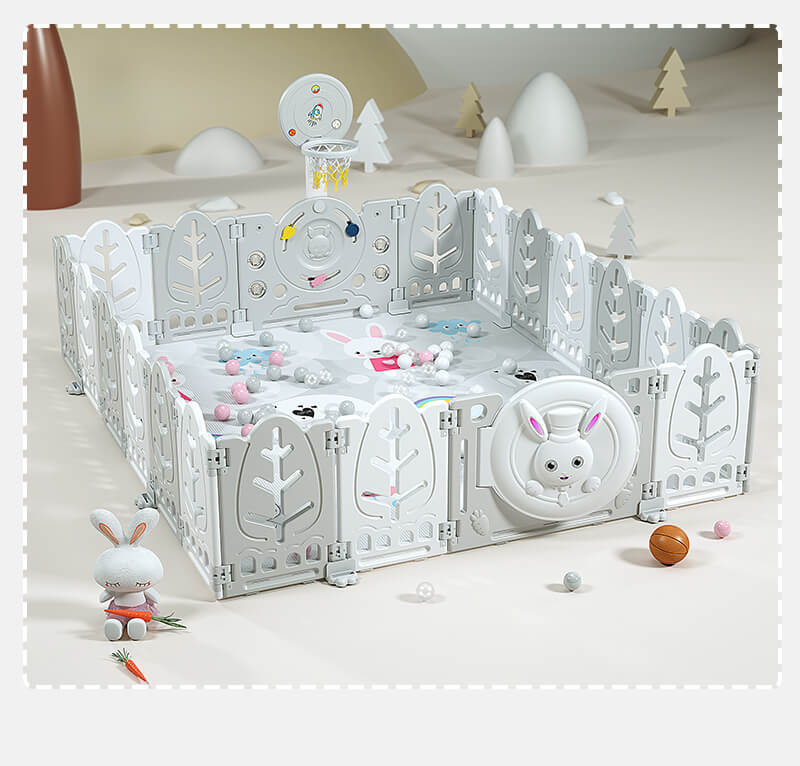
| Foldable playpen, flat-packed | 80 x 27 x 64 cm | 0.138 | ~490 cartons |
| Indoor slide, knock-down | 105 x 38 x 60 cm | 0.239 | ~280 cartons |
| Slide-and-swing combo | 3 cartons of 105 x 38 x 60 cm | 0.72 per set | ~94 sets |
Carton sizes vary by factory; confirm exact outer dimensions in writing.
3. LCL or FCL — where your order sits
Under roughly 15–18 CBM, cargo ships as LCL (less than container load), billed per cubic meter. From about 20 CBM up, a full container (FCL) usually wins on cost per unit, speed and safety — ask your supplier for both quotes and compare delivered cost.
| LCL (shared container) | FCL (full container load) | |
|---|---|---|
| Freight basis | Per CBM (billing starts around 1–2 CBM) | Flat rate per container |
| Typical fit | Orders under ~15–18 CBM | Orders from ~20 CBM up |
| Handling | Consolidated, may transship | Loaded once at the factory, sealed |
| QC access | Stuffing at a warehouse, hard to supervise | Loading photos and supervision possible |
| Cost per unit | Higher per CBM | Lowest per CBM at full volume |
4. Weight, pallets and packaging rules
Most play equipment loads are floor-loaded because cartons stack well — pallets waste 2–3 CBM and add weight. Four rules: stay under the payload (roughly 26–28 t, rarely an issue); the door opening is about 2.6 m high; if you use pallets, insist on ISPM-15 heat-treated wood, required by most destinations; and declare battery-powered items — lithium cells can trigger dangerous-goods paperwork.
5. Ask for a stuffing plan and watch the loading
A container is sealed once, so stuffing is your last chance to check what you paid for. Before the truck arrives, ask for a packing list with carton count and CBM per model (matching your PI), a stowage plan, and container and seal numbers. Request loading photos or video, and for a first order book a third-party pre-shipment inspection — AQL levels are in our MOQ and QC checklist for first-time buyers. Afterwards collect the bill of lading draft, commercial invoice, packing list, certificate of origin, and the test reports for your market’s kids play equipment certifications.
6. Budget the freight and the timeline
Ask for LCL and FCL quotes together with the packing list at quotation stage — you negotiate better with real numbers. A typical quote bundles ocean freight, origin charges, destination terminal and customs handling, plus local delivery; your budget also adds import duty (HS-code dependent) and marine cargo insurance, usually well under 1% of cargo value. Planning figures: sailing from China to the US West Coast takes two to three weeks, and to Northern Europe three to five weeks, before customs and inland legs. In peak season, book two to three weeks ahead.
Shipping is where sourcing projects stall or succeed, and the cheapest fix is planning: the right container, an honest CBM total, and a loading you can see in photos and documents. To see what buyers typically consolidate into 40HQ loads — slides, swings, playpens, combos — browse our kids slide collection and outdoor playground range, read our story, or contact us for current carton sizes and a loading plan.
发表评论
Want to join the discussion?Feel free to contribute!