
News

Importing Toys from China: Payment Terms and Trade Assurance Explained

Importing Toys from China: Payment Terms and Trade Assurance Explained

The short answer: for a first order from a Chinese toy or playground equipment supplier, pay 30% deposit by T/T and the remaining 70% against the bill of lading copy, after a pre-shipment inspection has passed. If the order is small, run it through Trade Assurance instead. Never pay 100% in advance, and never wire money to an account whose holder does not match the company name on your proforma invoice. The rest of this guide explains the terms buyers actually use, what each one costs, and the payment schedule to write into your contract.
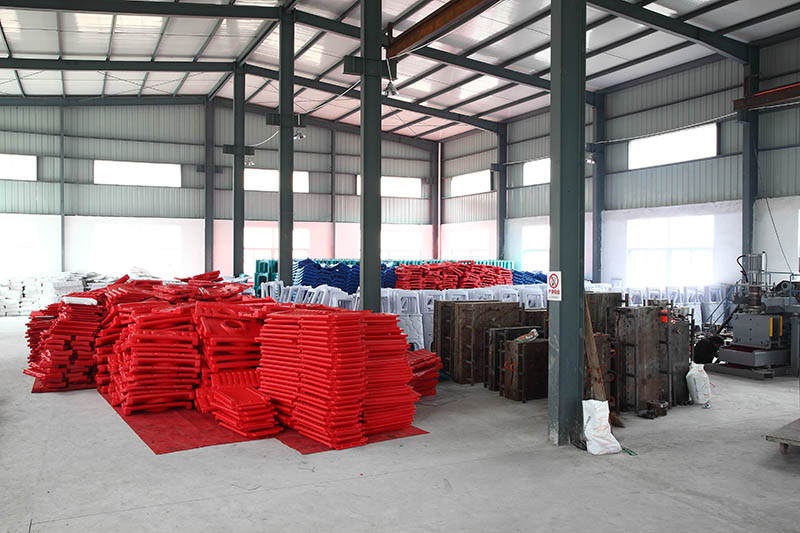
Blow-moulded finished goods area inside a Chinese toy factory

1. The terms that work for toys and play equipment

Bank transfer, called T/T (telegraphic transfer), is the default for almost every toy and playground equipment order. The 30/70 split protects both sides: the deposit covers raw material and mould time, and the balance is released only once the goods exist and have been checked. On repeat orders, buyers often move to 40/60 or open account terms.

Payment method Typical cost Risk to the buyer Best for
T/T 30% deposit + 70% against B/L copy Bank charges, roughly US$25–50 per transfer Low, if the cargo is inspected first Most first orders
T/T 100% after passed inspection, before shipment Same as above Low Repeat orders with a known factory
Letter of credit at sight 0.1–0.5% of order value, minimum US$150–300 Very low, the bank controls release Orders above roughly US$100,000
Trade Assurance (platform escrow) No separate fee on most platforms Low, the platform mediates disputes Small and mid-size orders, new suppliers
PayPal, credit card, transfer services 1–4% of the amount sent Medium, little leverage on quality Samples and tooling deposits
Open account or documents against payment Lowest High for the factory, comfortable for you Established relationships only

2. What Trade Assurance actually covers

Trade Assurance is escrow plus mediation, not insurance. You order on the platform, pay into the platform, and the money is passed on to the supplier according to the agreed milestones. If the goods are never shipped, arrive late beyond the contracted date, or fail to match the approved sample and specification, you can open a claim and the platform withholds the payment while it reviews the evidence. The evidence matters more than the argument: keep the agreed specification sheet, the approved sample photos, the inspection report and the shipping documents. That protection applies only to orders placed and paid through the platform, so paying a personal or unrelated company account means giving it up.

3. The payment schedule to write into your contract

Payment terms and production milestones should be one clause, not two. Every payment should buy you a document or a verification step, so that at no point are you fully paid with nothing in hand.

Stage Payment released What you should hold
Order confirmed 30% deposit Signed proforma invoice, agreed specification sheet, confirmed delivery date
Pre-production sample No payment Approved sample photos, or the physical sample
Mass production No payment Weekly production photos or a live video call
Pre-shipment inspection No payment Passed third-party inspection report
Shipment booked 70% balance against B/L copy Bill of lading copy, packing list, test reports

4. Red flags in a payment request

Late changes are where money is lost. Treat a sudden email with new bank details as fraud until it is confirmed by a second channel and backed by a bank certificate. Be careful with 100% advance on a first order, pressure to pay before a sample is approved, an account holder that differs from the contracting company, and any refusal to allow inspection before the balance is paid. With a genuine factory these questions are not a problem; the answers are simply documents.
Export sales office handling toy factory orders and payment documents

5. Currency, bank charges and paperwork

Quote in one currency and keep it. Most Chinese factories invoice in US dollars; the buyer usually pays its own bank charges and the supplier pays its own, which should be stated on the invoice. Keep the SWIFT confirmation for every transfer, make sure the invoice number matches the proforma invoice, and file the test reports with the shipping documents for customs clearance.

A buyer who understands payment terms rarely has to argue about them. Start with a 30/70 split, inspect before the balance, keep the deposit on the platform if the order is small, and pay only against documents. For the surrounding checks, read our guides on MOQ and QC for first-time buyers and how to verify a China toy factory, or browse the slide range and swing range. You can also read our story or contact us with your market, model and target quantity.
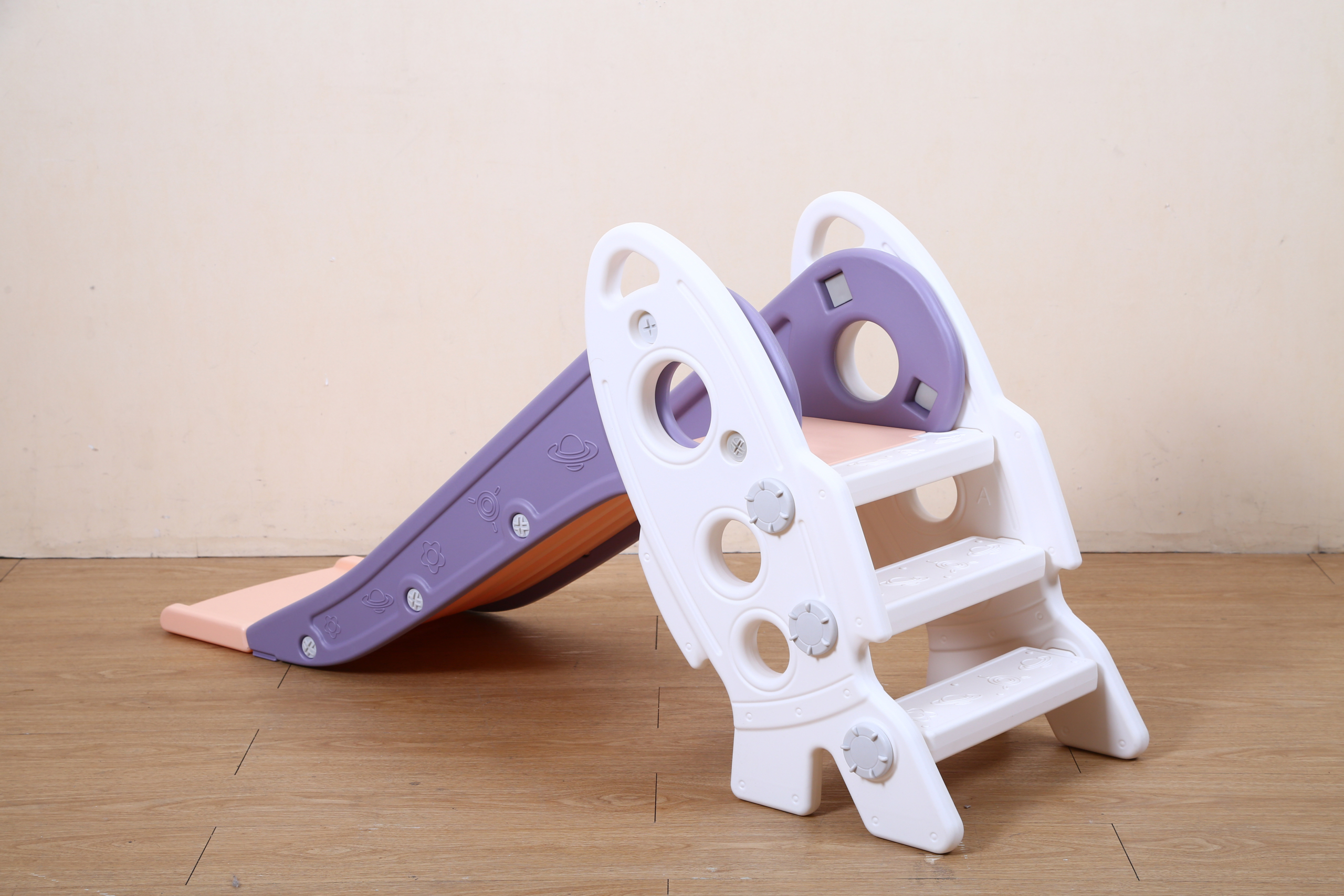

How to Verify a China Toy Factory Is Real: 8 Checks Before You Pay a Deposit

How to Verify a China Toy Factory Is Real: 8 Checks Before You Pay a Deposit

Verifying a China toy factory takes about a week and costs almost nothing. The short answer: check the business licence and Unified Social Credit Code on the National Enterprise Credit Information Publicity System, confirm the registered business scope actually covers toys and children’s products, make sure the company name on the quotation, proforma invoice and bank account all match, and ask for a live video walk-through of the production floor before you pay a deposit. Then confirm the test reports name your destination market, and book a third-party inspection before the balance payment. If a supplier avoids any of these steps, treat it as a red flag and keep looking.

Kids slide and climbing set produced by a China toy factory

1. Start with the paperwork, not the price

Every legitimate factory in China has a business licence with a Unified Social Credit Code (USCC). The code is free to check on the national enterprise credit system, and it shows the registered capital, the legal representative, the registered address, the business scope and whether the company has been listed as operating abnormally. Run this check on the company that will issue your invoice, not on the name printed on the catalogue.

What to verify Where to check Warning sign
Business licence + USCC National Enterprise Credit Information Publicity System Company cannot be found, or shows “abnormal operation”
Business scope Licence text Scope covers only trading or consulting, no toy manufacturing
Name consistency Quotation, proforma invoice, contract, bank account Bank account holder differs from the company name
Export rights Customs registration number on documents No customs code and no export record at all
Registered address Licence vs. the site you visit Address is a virtual office or a residential building
Certificates EN71/CE, ASTM F963, CPC, ISO 9001 files Report does not name your market, or the model does not match

2. Make the names match on every document

Trading companies are a normal part of the supply chain, and many of them are reliable. What matters is that you know which entity you are buying from. If the legal entity on the bank account differs from the company on the quotation, you lose the paper trail you would need if the goods arrive out of specification. Ask for the beneficiary name in writing before the deposit, and compare it letter by letter with the licence.

3. Walk the factory live, not through a photo album

Video calls have made factory verification cheap. Ask for a scheduled call, not an edited clip, and request a continuous walk: the gate with the company name, the production floor, the mould store, the assembly line, the warehouse and the sample room. Ask the person holding the camera to show the business licence mounted on the wall and to open a random carton so you can read the label. A real plant can do this in twenty minutes. A broker will postpone the call, show the same corner twice, or keep the camera tight on a finished display.

Toy factory workshop in China during a live video verification call

4. Check export experience, not just capacity

Ask how many years the factory has exported to your region, how many containers it ships per month and which markets it serves. A serious supplier can share a redacted bill of lading, a customs declaration, trade-assurance order history or two reference customers in a country where you do not compete. Capacity claims are easy; export documents are hard to fake.

5. Confirm the certifications name your market

Toy certification is market-specific, so a generic “CE certificate” is not enough. The test report should come from a recognised lab, carry a report number you can verify with the laboratory, and list the exact model you are buying.

Market Typical standard Document you should receive
European Union EN71-1/2/3, REACH Test report + CE Declaration of Conformity
United States ASTM F963, CPSIA Test report + Children’s Product Certificate
United Kingdom BS EN71 Test report + UKCA Declaration of Conformity
Australia / New Zealand AS/NZS ISO 8124 Test report naming the model
Factory level ISO 9001, BSCI or Sedex Certificate plus the audit report copy

6. Sample first, inspect before the balance

Order a paid sample of the exact model and colour, then check the material, wall thickness, edges, gaps and fittings against the standard you must meet. For the bulk order, book a third-party pre-shipment inspection with AQL sampling before you release the balance. The cost is small compared with a container that fails customs or comes back from retail.

7. Red flags worth ending the conversation over

Refusal to do a live video tour. A bank account that does not match the company name. A price far below every other quote. A test report that does not match the model or the market. Pressure to pay a large deposit to “hold today’s price”. No customs record after claiming years of export. Any one of these is a reason to slow down; two or three together are a reason to walk away.

8. Verify the supplier the way you verify the product

Due diligence is not a single document — it is a short sequence: licence, names, live tour, export record, certification, sample, inspection. Work through it before money moves and you remove most of the risk from importing children’s play equipment. For the product side, see our certifications explained for buyers and the MOQ and QC checklist for first-time buyers. You can also browse our slide range and swing range, read our story, or contact us with your market, model and quantity.

Kids Furniture OEM/ODM in China: A Buyer’s Guide to Custom Tables, Chairs and Bookshelves

Kids Furniture OEM/ODM in China: A Buyer’s Guide to Custom Tables, Chairs and Bookshelves

Sourcing custom kids furniture from China? The short answer: OEM (you supply the design) is quoted at roughly 200–500 pieces per model with a one-off tooling fee and 30–45 days of production; ODM (you customise an existing factory model) starts near 100–300 pieces, with no tooling fee and 20–35 days. Samples take 5–20 days. Before any deposit, confirm the EN71 + CE report for Europe or the ASTM F963 test report with a CPC for the United States, and agree the material, edge and gap standard in writing.

Custom kids furniture OEM ODM manufacturer in China drawing board with bookshelf

1. OEM or ODM — which model fits your business?

In OEM, you bring the drawing or a physical sample: the factory builds your table, chair or bookshelf to your dimensions, colour, logo and retail packaging, and the design stays yours. In ODM, you start from a model the factory already develops and sells, then change colour, branding and packaging. ODM is the faster, cheaper route to a first container; OEM is what you move to when you want a range competitors cannot simply reorder from the same catalogue.

2. How the two models compare

The planning figures below are the ranges most importers work with. Treat them as negotiation starting points rather than fixed prices.

Factor OEM ODM
Design source Yours — drawings, 3D files or samples Factory’s existing model
Tooling / mould fee One-off, only when a new mould is needed Usually none
Typical MOQ per SKU 200–500 pcs 100–300 pcs
Sample lead time 10–20 days 5–12 days
Production lead time 30–45 days 20–35 days
Unit cost at equal volume Higher (custom tooling, shorter runs) Lower
Design ownership Yours, with a written assignment clause Factory retains the design
Best for Private label, brands, distributors building a unique range First orders, market testing, quick top-ups

3. Materials and compliance to confirm before you order

Kids furniture is a children’s product in every major market, so the material list and the test report have to match. Ask which grade of plastic or board is used, whether the paint is water-based, and whether edges and gaps meet the anti-pinch rules of your standard.

Material Typical parts What to confirm
HDPE / PP Chairs, tables, drawing boards Virgin vs recycled resin, wall thickness, colour fastness
Plywood / MDF Bookshelves, table tops E1/E0 or CARB P2 formaldehyde class, sealed edges
Powder-coated metal Frames, legs, brackets Coating adhesion, no sharp ends, rust protection
Screws and fittings Assembly points Anti-loosening design, spare parts supplied
Certification EN71-1/2/3 + CE (EU); ASTM F963 + CPC (US); REACH A test report naming your destination market, valid per model

Kids furniture OEM ODM factory workshop in China

4. Sampling and production timeline

A custom order runs on a fixed sequence. Two points decide your launch date: sample approval and your place in the factory’s queue — book both early, because Q4 is the busiest export season.

Step Typical time What you approve
RFQ and quotation 2–5 days Drawing, material, packaging, Incoterm
Sample making 5–20 days Colour, size, strength, logo position
Deposit (usually 30%) and confirmation 1–3 days Proforma invoice, artwork files
Bulk production 20–45 days In-line updates, material report
Pre-shipment inspection 1–3 days AQL sampling, carton drop test
Balance payment and shipping 2–7 days B/L, packing list, certificates

5. What actually drives the cost

Four items explain most of the gap between quotes. The mould fee is one-off and often amortised or waived once volume passes a threshold — get that in writing. Colour and logo changes add setup cost per run, so fewer SKUs at higher volume beat many small runs. Retail packaging can move landed cost more than the furniture itself, and carton size decides how many units fit a 40HQ.

6. Questions to put in your RFQ

A short, precise RFQ gets quotes you can compare. Ask every candidate the same questions: What is the MOQ per model and per colour? Is the tooling fee refundable at volume, and who owns the mould? Which test reports do you hold for this model, and can the report name our market? What are the sample and production lead times at our quantity? What payment terms do you accept, and will a third-party inspection fit your schedule? What spare parts ship with the order?

A custom kids furniture programme is a manufacturing project, not a catalogue order: agree the drawing, the certification and the sampling standard before money moves, then scale only the SKUs that reorder. See also our certifications explained for buyers and the MOQ and QC checklist for first-time buyers. To talk through a specific project, browse our table and chair range, read our story, or contact us with your target market, quantities and the standard you must meet.

Wholesale Kids Playground Equipment: Slides, Swings or Climbing Sets — What to Stock First

Wholesale Kids Playground Equipment: Slides, Swings or Climbing Sets — What to Stock First

If you are buying wholesale kids playground equipment from China for the first time, stock slides first, add climbing and play sets once you serve daycares or kindergartens, and treat swing sets as the third line. Slides are the fastest-moving and most container-friendly category (typical MOQ 100–300 pieces per model); climbing and combination play sets carry higher unit value and margins but need more assembly support; swing sets sell steadily yet take the most container space per unit. Choose the mix by your customer type, then lock the certifications for your destination market before you sign the proforma invoice.

Wholesale kids playground equipment with slides, swings and climbing sets

1. Slides: the fastest-moving line

Plastic slides dominate home and kindergarten demand because they are light, safe to knock down and cheap to ship. As a wholesaler you can carry a compact indoor model, a medium garden slide and a taller unit for daycares, and still cover most retail price points. Stock depth beats range width here: reorders on two or three proven models keep container utilization high and simplify quality control.

2. How the main categories compare

The table below shows the planning figures importers typically work with. Treat MOQ, price band and container density as negotiation starting points, not fixed values — every factory quotes differently.

Category Typical buyer Typical MOQ per model Typical wholesale price Units per 40HQ (approx.) Key certifications
Plastic slides (home use) Home parents; toy & baby stores 100–300 pcs $15–$60 200–300 sets EN71 / ASTM F963 / CPC
Slide-and-swing combos Daycares; garden & toy retailers 50–100 sets $60–$200 80–120 sets EN71 / ASTM F963 / ASTM F1148
Climbing frames & play sets Kindergartens; playground contractors 30–50 sets or per project $100–$500 40–80 sets ASTM F1487 / EN 1176 (commercial)

3. Match the range to the channel

Retail and e-commerce buyers sell what fits in a parcel and assembles in minutes, so compact slides and small combos move first for them. Institutional buyers — daycares, kindergartens, preschool chains — order play sets in bulk, time deliveries to the school year and usually ask for certificates bundled with each shipment. Commercial playground operators buy per project through distributors; they matter less for your first container and more once you hold stock of structures and spare parts.

Indoor kids climbing frame and slide set for wholesale

4. Plan in containers, not in units

Wholesale pricing is container economics: the same 40HQ that fits 200–300 flat-packed slides fits far fewer swing sets, because frames are long and irregular. When comparing product lines, compare loaded CBM per unit and landed cost, not factory price alone. The full math, from carton measuring to stuffing plans, is in our 40HQ container loading guide.

5. Certifications decide which markets you can enter

Every destination has a gate: EN71 and CE for Europe, ASTM F963 with a CPC (Children’s Product Certificate) for the United States, and ASTM F1487 or EN 1176 once equipment is installed commercially rather than sold as a home toy. Ask for the test report that names your destination market, not a generic certificate, and keep it per model and per production batch. What to check is covered in our kids play equipment certifications guide.

6. A sensible first mixed order

For a first 40HQ, most importers start with roughly 60% slides, 25% combination play sets and 15% swing sets — heavy on the fastest-moving lines, light on the bulkiest. Order two to three models per line, keep spares for the parts that break first (bolts, brackets, slide sections), and book a third-party pre-shipment inspection with AQL sampling on the first order; the procedure is spelled out in our MOQ and QC checklist for first-time buyers.

A balanced wholesale range is built one container at a time: lead with slides, prove demand for play sets, then widen into swings as reorders repeat. For current export models, MOQs and carton sizes, browse our slide, swing and outdoor playground ranges, read our story, or contact us with your target market and we’ll suggest a mix that fits a container.

Playground Equipment Shipping from China: 40HQ Container Loading Guide

Playground Equipment Shipping from China: 40HQ Container Loading Guide

Play equipment shipping from China is a volume game: a 40HQ container holds roughly 68 CBM of cargo, and most export loads are planned around that number. Method: measure every carton, convert to cubic meters, total the order, keep 5–8% free for dunnage and loading gaps, and get a written stuffing plan before the container is sealed. Play equipment is bulky but light, so the cubic meter is the number your forwarder, your budget and your 40HQ all speak in.

1. Start with the right container

Play equipment is sold by volume, not weight, so the container choice drives the quote. The 40-foot high-cube (40HQ) is the workhorse for slides, playpens, swings and combos — its taller interior fits high-stacked cartons better than a standard 40GP. Keep 20GP for samples and small trials.

Container Interior (L x W x H) Practical capacity Approx. max payload
20GP 5.90 x 2.35 x 2.39 m ~28 CBM ~28 t
40GP 12.03 x 2.35 x 2.39 m ~58 CBM ~26 t
40HQ 12.03 x 2.35 x 2.69 m ~66–68 CBM ~26 t

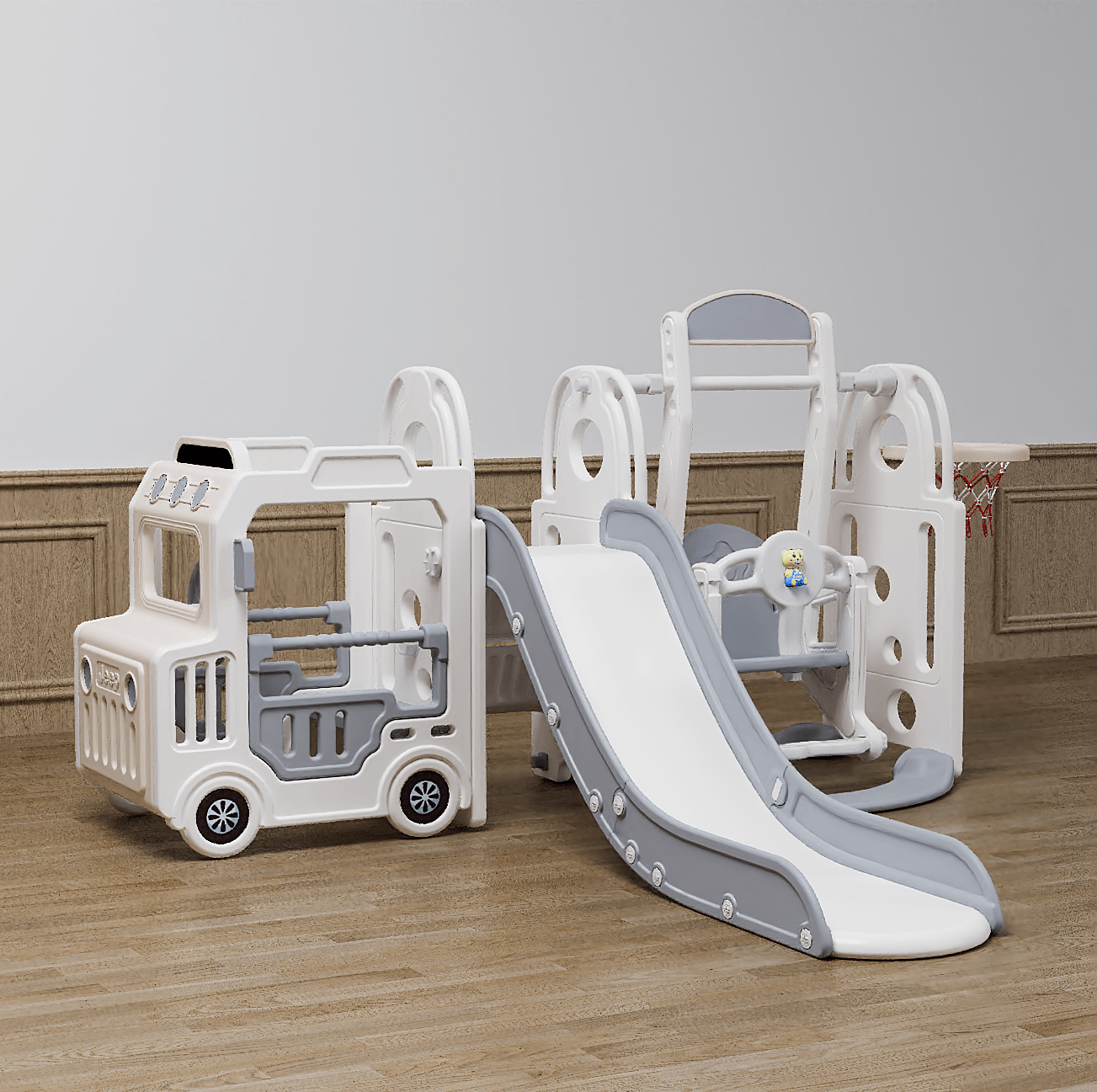
kids bus slide and swing set for outdoor playground equipment export

2. Do the CBM math yourself

CBM is length x width x height in meters per carton, times the number of cartons. The table shows worked examples. Whatever you buy, reserve 5–8% for dunnage and loading gaps — plan on about 90% of the theoretical maximum — and never rely on a supplier’s casual estimate: ask for the carton list per model and add it up yourself.

Typical export item (example cartons) Outer carton (L x W x H) CBM per carton Theoretical max per 40HQ
Foldable playpen, flat-packed 80 x 27 x 64 cm 0.138 ~490 cartons
Indoor slide, knock-down 105 x 38 x 60 cm 0.239 ~280 cartons
Slide-and-swing combo 3 cartons of 105 x 38 x 60 cm 0.72 per set ~94 sets

Carton sizes vary by factory; confirm exact outer dimensions in writing.

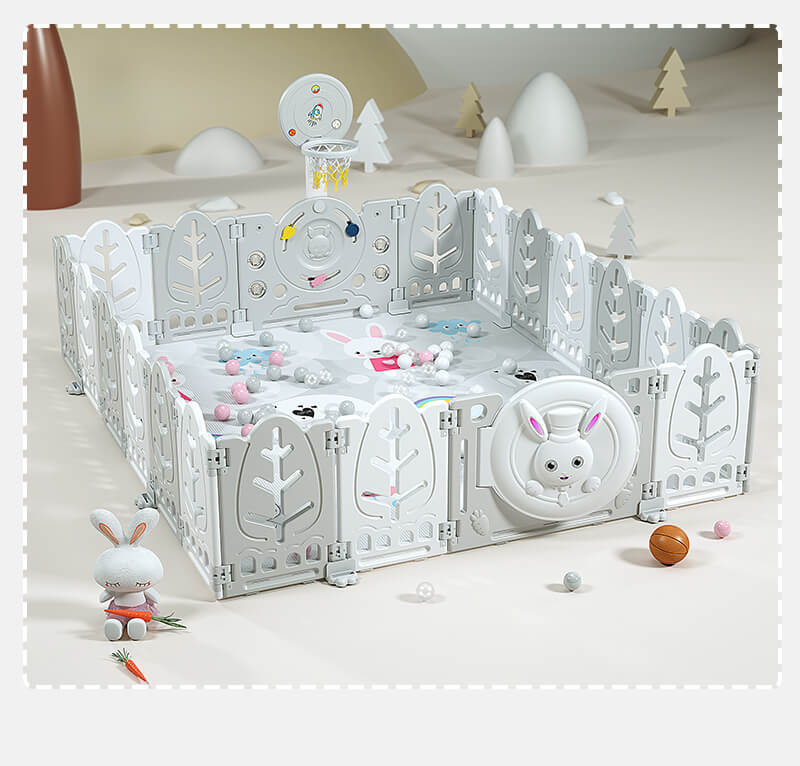
rabbit design kids playpen as typical indoor play equipment export

3. LCL or FCL — where your order sits

Under roughly 15–18 CBM, cargo ships as LCL (less than container load), billed per cubic meter. From about 20 CBM up, a full container (FCL) usually wins on cost per unit, speed and safety — ask your supplier for both quotes and compare delivered cost.

LCL (shared container) FCL (full container load)
Freight basis Per CBM (billing starts around 1–2 CBM) Flat rate per container
Typical fit Orders under ~15–18 CBM Orders from ~20 CBM up
Handling Consolidated, may transship Loaded once at the factory, sealed
QC access Stuffing at a warehouse, hard to supervise Loading photos and supervision possible
Cost per unit Higher per CBM Lowest per CBM at full volume

4. Weight, pallets and packaging rules

Most play equipment loads are floor-loaded because cartons stack well — pallets waste 2–3 CBM and add weight. Four rules: stay under the payload (roughly 26–28 t, rarely an issue); the door opening is about 2.6 m high; if you use pallets, insist on ISPM-15 heat-treated wood, required by most destinations; and declare battery-powered items — lithium cells can trigger dangerous-goods paperwork.

5. Ask for a stuffing plan and watch the loading

A container is sealed once, so stuffing is your last chance to check what you paid for. Before the truck arrives, ask for a packing list with carton count and CBM per model (matching your PI), a stowage plan, and container and seal numbers. Request loading photos or video, and for a first order book a third-party pre-shipment inspection — AQL levels are in our MOQ and QC checklist for first-time buyers. Afterwards collect the bill of lading draft, commercial invoice, packing list, certificate of origin, and the test reports for your market’s kids play equipment certifications.

6. Budget the freight and the timeline

Ask for LCL and FCL quotes together with the packing list at quotation stage — you negotiate better with real numbers. A typical quote bundles ocean freight, origin charges, destination terminal and customs handling, plus local delivery; your budget also adds import duty (HS-code dependent) and marine cargo insurance, usually well under 1% of cargo value. Planning figures: sailing from China to the US West Coast takes two to three weeks, and to Northern Europe three to five weeks, before customs and inland legs. In peak season, book two to three weeks ahead.

Shipping is where sourcing projects stall or succeed, and the cheapest fix is planning: the right container, an honest CBM total, and a loading you can see in photos and documents. To see what buyers typically consolidate into 40HQ loads — slides, swings, playpens, combos — browse our kids slide collection and outdoor playground range, read our story, or contact us for current carton sizes and a loading plan.

Sourcing Indoor Playground Equipment from China: A 7-Step Buyer’s Guide

Sourcing Indoor Playground Equipment from China: A 7-Step Buyer’s Guide

China supplies most of the world’s indoor playground equipment, and a well-run sourcing project comes down to seven steps: define your product type, confirm the target market’s certifications first, shortlist factories with export experience, verify the factory before you order, agree MOQ and payment in writing, run independent QC on the first shipment, and file the paperwork for repeat orders. Typical MOQs run from 50 pieces for soft play panels to 300+ pieces for molded plastic slides, and commercial indoor playgrounds are usually quoted per set. Start with the certifications, not the price list — every market rejects non-compliant play equipment at customs.

1. Define your product type: home-use vs commercial

Indoor play equipment splits into two very different buying tracks. Home-use items (playpens, small slides, playhouses, ball pools) are mass-produced, container-friendly and sold through retail channels. Commercial equipment (soft play zones, climbing frames, custom themed playgrounds) is made to order, often designed for a specific floor plan, and carries far higher unit value. Decide your track before contacting suppliers — the factory, the MOQ and the QC standards are different.

Category Typical material Who buys it Typical MOQ
Foldable playpens HDPE frames, fabric panels Home parents, baby stores 200–500 pcs
Indoor slides (single or combo) Molded PP/PE plastic Retail, kindergartens 100–300 pcs
Soft play sets Foam core, PU leather covers Indoor playgrounds, malls 50–200 pcs
Playhouses Plastic panels or wood Home, nurseries 100–300 pcs
Ball pools and accessories PE/PP plastic, mesh bags Home, daycare centers 100–500 pcs
Custom indoor playgrounds Metal frame + plastic/foam Commercial operators 10–30 sets

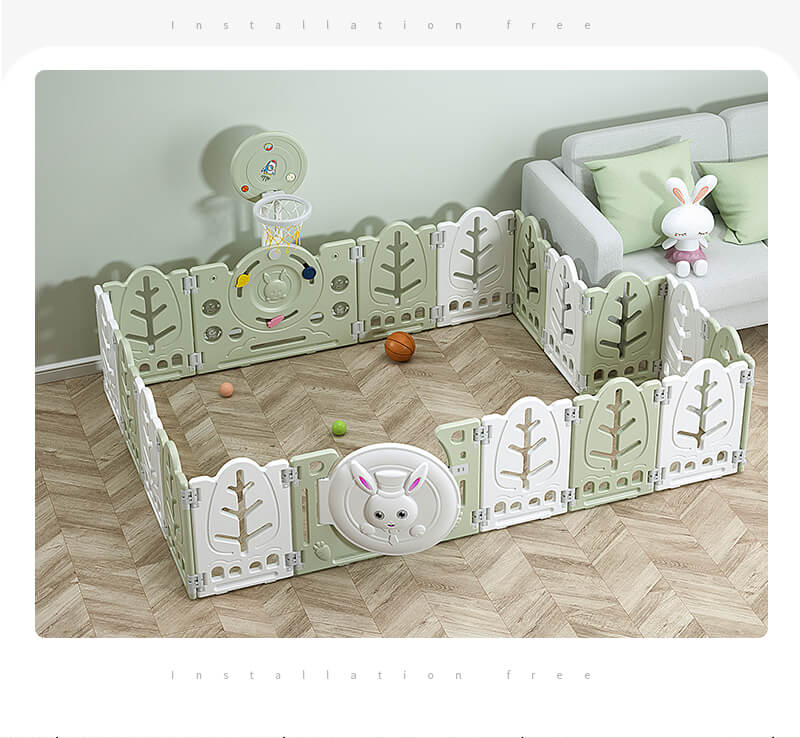
rabbit playpen indoor play equipment

2. Confirm certifications before you ask for prices

The single biggest sourcing mistake is comparing prices before checking compliance. A product that passes the EU toy directive will not automatically pass US rules — each market has its own requirements, and the factory’s test reports must name your model with a recent test date. For a deeper breakdown, see our guide to kids play equipment certifications.

Destination market Key certification What to ask the factory for
European Union CE (EN71-1/2/3) Test report naming your model, DoC
United States ASTM F963 + CPC Children’s Product Certificate, lab report
United Kingdom UKCA (EN71-based) UKCA test report and declaration
Soft play anywhere Fire-retardant foam covers Flame-retardancy test report for covers

kids car playhouse indoor playground equipment

3. Shortlist factories with export experience

Ask every candidate for three things: their export markets in the last two years, a factory license and business registration, and customer references you can contact. A factory that already ships to your country knows your customs paperwork, labeling and packaging expectations. Cross-check the business name against trade databases, and be wary of trading companies that refuse to disclose the actual manufacturer.

4. Verify the factory before ordering

For a first order, verify in one of three ways, from cheapest to most thorough: a video call walk-through of the workshop and warehouse, a local third-party audit (SGS, Bureau Veritas, TÜV or similar), or a physical visit if your schedule allows. Confirm the factory actually produces the category you are buying — a playpen maker is not automatically a soft play maker. Our soft play factory checklist lists 11 things to verify on site.

5. Agree MOQ, price and payment in writing

Get the MOQ per model and per color, the FOB or EXW price, the deposit and balance terms (30/70 before shipment is common), and the lead time in a written quotation. Ask what happens if your order is under MOQ — mixing colors, mixing models or buying stock items are common solutions. The negotiation and contract details are covered in our MOQ and QC checklist for first-time buyers.

6. Run independent QC on the first shipment

Do not rely on the factory’s own inspection for your first order. Book a pre-shipment inspection with a third party, check against the AQL levels in your contract, and ask for photos of the samples and cartons. This is the cheapest insurance you will ever buy for a container of play equipment.

7. Keep the paperwork for repeat orders

File the test reports, inspection reports, commercial invoice, packing list and container photos in one folder. On your second order, most of this documentation is reusable — the factory’s QC schedule and your inspection criteria stay the same, and reordering becomes a one-email process.

Sourcing indoor playground equipment from China is a repeatable process, not a gamble: define the product, lock the certifications, verify the factory, and inspect the first shipment. If you are evaluating suppliers now, browse our kids slide collection and kids playhouse range to see how a manufacturer presents its own indoor line, read our story, or contact us with your sourcing questions.

Playground Equipment Import: MOQ and QC Checklist for First-Time Buyers

Playground Equipment Import: MOQ and QC Checklist for First-Time Buyers

Importing playground equipment from China comes down to two numbers: the MOQ you can commit to and the QC plan that protects you. In practice, most Chinese factories set minimum orders of 100–300 pieces for molded plastic slides, 50–200 pieces for soft play items, and 10–30 sets for large wooden or metal combination structures — and every serious order runs through four quality stages: pre-production, during production, pre-shipment inspection, and loading supervision. The short answer: agree the MOQ, the QC checkpoints and the acceptance levels in writing before you pay the deposit, and insist on an independent pre-shipment inspection for your first order.

This guide gives first-time importers the exact MOQ ranges, the QC stages, and the contract clauses that turn a cheap quote into a safe shipment. The same rules apply whether you are buying home slides, playpens, soft play or full outdoor playground sets.

1. What MOQ really means for playground equipment

MOQ is set by the factory’s production economics, not by supplier mood. Injection-molded slides need a mold and a color run; soft play needs foam cutting and cover sewing; combination sets are labor-intensive. Negotiate on pieces per model, per color and per order, and confirm in writing whether the MOQ is per shipment or per month.

Product type Typical MOQ Why it is set that way
Molded plastic slides 100–300 pcs per color Mold changes and color runs drive the cost
Soft play / foam items 50–200 pcs Foam cutting and cover sewing run in batches
Foldable playpens 200–500 pcs Light and container-friendly; easiest to mix
Wooden or metal combination sets 10–30 sets Higher unit value, more manual labor
Custom OEM / ODM designs Negotiated Tooling cost shared or amortized into unit price

If your order is below the MOQ, do not just accept a higher unit price — ask what the factory can do: mix colors, mix models in one container, or offer stock items. A flexible factory will say so in writing.

kids slide playground equipment

2. The four QC stages that protect your order

Quality control on playground equipment is a process, not a final check. Ask the factory for a QC schedule with dates, and reserve your right to attend or to send an inspector at each stage.

QC stage Timing What is checked
Pre-production Before mass production Test reports, material samples, mold approval, pilot run
During production At 30–50% completion Dimensions, wall thickness, color consistency, assembly
Pre-shipment inspection (PSI) At 100% completion Function, safety, sharp edges, packaging, AQL sampling
Loading supervision At container loading Carton count and condition, container cleanliness

On a first order, use a third-party inspection company (for example SGS, Bureau Veritas or TÜV) for the pre-shipment inspection. It costs a few hundred dollars and gives you an independent report with sample photos and an AQL verdict you can hold against the supplier.

3. Set acceptance criteria in the contract

Vague QC criteria are the number one source of disputes. Put these in the contract: dimension tolerance (±3 mm on molded parts), material grade (virgin plastic or food-grade, foam density in kg/m³), color approval against a signed sample, edge finishing (no sharp edges or burrs), packaging (export cartons, corner protection, polybag per piece), and the AQL sampling level. A common default for playground equipment is AQL 0 / 1.5 / 4.0 for critical / major / minor defects, with 1.5 applied to safety-related checks.

kids study table and chair set

4. Common defects to watch for

Molded slides: thin walls, sink marks, weld lines and off-color batches. Soft play: uneven foam density, thin covers and unsealed seams. Metal parts: rust, burrs and wrong galvanizing thickness. Ask the factory for its own defect list — a mature manufacturer keeps one and will share it.

5. The paperwork next to the parts

Demand test reports (CE/EN71 for the EU, ASTM F963 and CPC for the US, fire-retardancy for soft play) that name your model with a recent test date, confirm the deposit and balance payment terms, and book shipping early. For the documentation side in detail, see our guides on kids play equipment certifications and the soft play factory checklist.

None of this needs a big team — a two-page checklist signed into the contract covers most of the risk. If you are evaluating suppliers now, you can browse our kids slide collection and outdoor playground equipment to see how a manufacturer presents its own range, read our guide to choosing a kids slide manufacturer in China, read our story, or contact us with your sourcing questions.

Kids Play Equipment Certifications: CE, EN71, ASTM F963 & CPC Explained for Buyers

Kids Play Equipment Certifications: CE, EN71, ASTM F963 & CPC Explained for Buyers

Every kids play equipment import starts with the same question: which certifications do I actually need? The short answer: for the European Union, CE marking backed by EN71 test reports for toys, or EN 1176 for playground equipment; for the United States, ASTM F963 compliance plus a Children’s Product Certificate (CPC) under CPSIA. No certificate, no market — EU customs can hold a CE-marked shipment without the backing test report, US regulators and Amazon require the CPC, and a photo of a certificate without a report is worthless.

This guide explains the four certification names you will meet in every quote, which one applies to your market, and the exact documents to demand from a supplier before you pay.

1. CE marking and EN71 — European Union

CE is a legal requirement for toys sold in the EU. The underlying safety standards are EN71-1 (mechanical and physical), EN71-2 (flammability) and EN71-3 (migration of certain elements). The manufacturer — or the importer, who is legally the manufacturer’s representative in the EU — must hold a Declaration of Conformity and keep test reports on file. A molded plastic slide sold as a toy for children under 14 falls under this route.

outdoor playground equipment

Certification Market Standard Applies to
CE / EN71 EU Toy Safety Directive 2009/48/EC Toys for children under 14
EN 1176 EU Playground equipment standard Fixed playground equipment, indoor play areas
ASTM F963 US US toy safety standard Toys sold in the United States
CPC / CPSIA US Children’s Product Certificate All children’s products for ages 12 and under
Fire retardancy UK / EU / US e.g. BS 5852, CFR 1633 Soft play foam, padded equipment

2. ASTM F963 and CPC — United States

ASTM F963 is the mandatory toy safety standard in the US, enforced by the CPSC. Any product intended for children 12 and under must also have a CPC — a document issued by the manufacturer or importer stating that the product complies, based on testing by a CPSC-accepted third-party laboratory. Amazon and most US retailers ask for the CPC before listing; importers without it face detention at the border and delisting.

3. EN 1176 — when equipment is not a toy

Commercial playground equipment — slides bolted into kindergarten yards, indoor soft play structures — is usually not classified as toys and falls under EN 1176 instead of EN71. EN 1176 covers safety distances, impact-absorbing surfaces, entrapment and structural integrity. The distinction matters: a supplier quoting EN71 for a commercial playground may be under-certified for your project.

kids stepping stones climbing equipment

4. Documents to demand from the factory

Document What it proves Red flag if…
Full test report (PDF) Product passed; names lab, model and test date Only a certificate photo is offered
Certificate of Conformity Legal statement of compliance No matching test report behind it
Business license Factory is a real manufacturer License scope says “trading” only
Lab accreditation Report comes from a trusted laboratory Lab is not CNAS / ILAC accredited

5. Red flags that should end the conversation

A supplier that cannot produce a test report listing your model, or that shows the same report for every product, is not ready for export. Check that the report names your exact model, that the test date is recent, and that the laboratory is accredited. For soft play equipment, demand the fire-retardancy report as well — untreated foam is a serious fire risk.

6. Where certifications matter in practice

Certifications gate every step: customs clearance, Amazon listing, retail purchase orders and liability insurance. Verifying them before production costs a few hours of email; discovering they are missing after shipment can cost the entire container.

Certification paperwork is the least glamorous part of sourcing kids play equipment — and the most important. Confirm the standards for your market, demand full reports, and walk away from any supplier that hesitates. If you are evaluating suppliers now, you can browse our kids slide collection and outdoor playground equipment to see how a manufacturer presents its own range, read our guide to choosing a kids slide manufacturer or our soft play factory checklist, read our story, or contact us with your sourcing questions.

‘av-social-sharing-box avia-builder-el-4 el_after_av_textblock avia-builder-el-last ‘>