

Age-Appropriate Toys for 0 to 3: A Stage-by-Stage Buying Guide
Age-Appropriate Toys for 0 to 3: A Stage-by-Stage Buying Guide
Toy packaging carries an age band — “3+”, “0–6 months” — and most parents treat it as the whole answer. It is a starting point, not a rule. Two children born the same month can be months apart in what they can do, and a toy that is too easy gets abandoned as fast as one that is too hard. The better question is which skill your child is practising right now: reaching, gripping, crawling, stacking, pretending. Match the toy to that and the age label mostly takes care of itself.
Skills first, age second
A toy earns its place when it sits just past what a child can already do: close enough to be achievable, far enough to be interesting. A nine-month-old who has just learned to bang two blocks together does not need a shape sorter yet. Watch what your child repeats, then buy one small step ahead of it. This table is a rough map, not a shopping list.
| Stage | What they are practising | Toys that fit | Leave for later |
|---|---|---|---|
| 0–6 months | Tracking with the eyes, reaching, tummy time | High-contrast cards, soft rattles, textured balls, a mirror board | Small parts, screens, anything heavy enough to pull over |
| 6–12 months | Sitting, crawling, passing objects hand to hand | Stacking cups, chunky blocks, board books, a rolling ball | Finger-precision toys, standing-balance toys |
| 12–24 months | Walking, carrying, fitting one thing into another | Push-along toys, large blocks, first shape sorter, low slide, ride-on | Pieces under 4 cm, long cords, fragile models |
| 24–36 months | Pretend play, simple problem solving, longer focus | Role-play sets, 6–12 piece puzzles, crayons, sand and water play, trike | Complex kits, electronic toys that play for the child |
0–6 months: eyes, hands and tummy time
For the first half year a toy is mostly a tool for the eyes and hands. High-contrast patterns, a soft rattle, a textured ball and a safe mirror give a baby something to track, reach for and mouth. Fewer works better than many: two or three within reach is plenty, and they should be light enough to drop without risk. Skip batteries at this stage — the baby is the entertainment.
6–12 months: mouthing is still the main test
Once babies sit and crawl, they explore by putting things in their mouth, so anything that fits inside a small-parts cylinder is out. Choose stacking cups, chunky blocks with rounded edges, board books and a ball that rolls predictably. Washable surfaces matter more than clever features, because this is also the age when toys get dragged across the floor and chewed.
12–24 months: the walking year
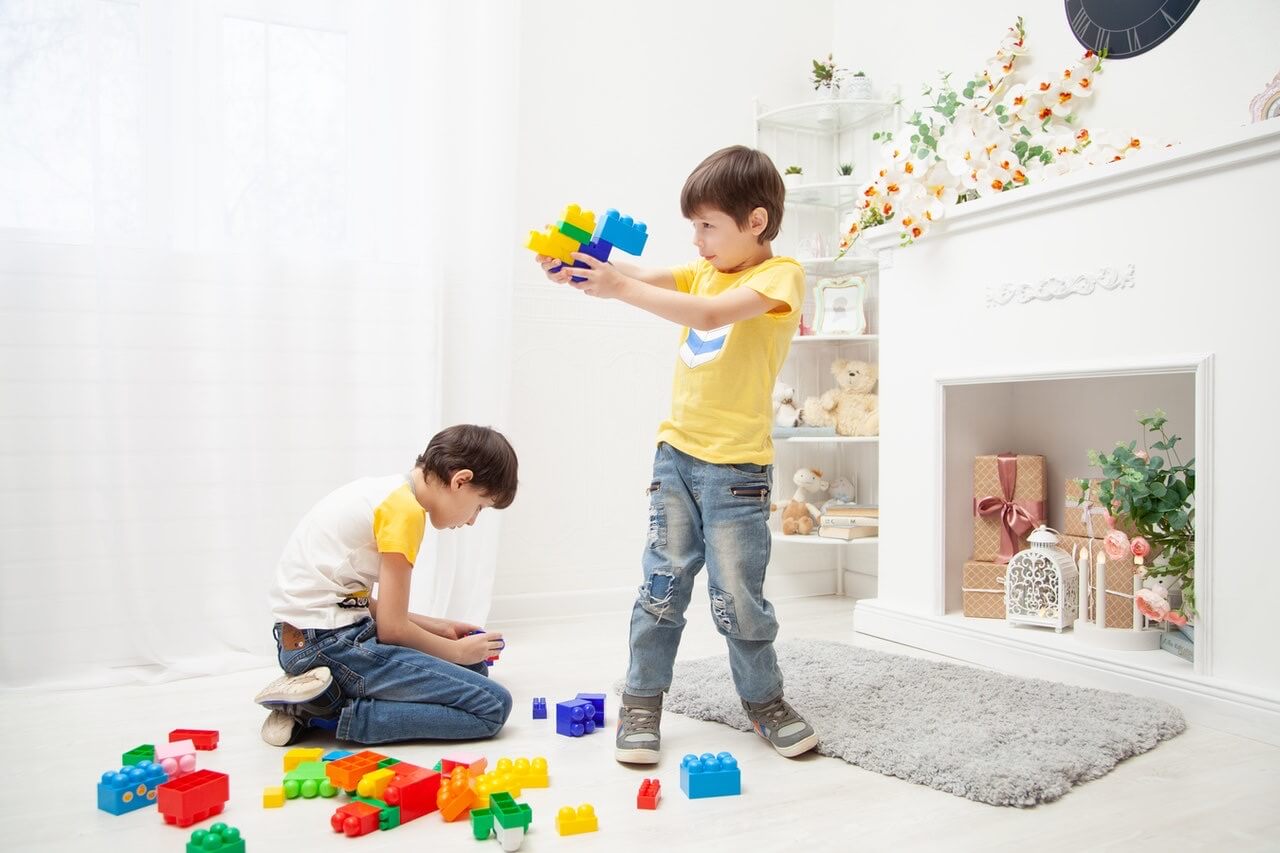
Walking changes everything. Push-along toys and ride-ons give a new walker something to hold, while large blocks and a low slide turn movement into a game. This is the age to clear floor space rather than add toys: toddlers need room to carry, climb and fall safely. If you are choosing climbing equipment, our notes on climbing frame safety at home cover the setup points that matter, and the gross motor milestones guide explains what usually comes next.
24–36 months: pretend play and longer focus
By two, the toy is often a prop for a story. A pretend kitchen, a doll with a blanket, a box of blocks that becomes a garage — these hold attention far longer than a toy with one button. Open-ended materials such as blocks, sand, water and crayons keep working as the child grows. Puzzles of six to twelve pieces are a good stretch, as long as an adult helps rather than takes over.
Safety checks that matter more than the label
Age markings are a legal requirement in most markets, but they do not replace a look at the toy itself. Check that no part fits through a small-parts tester, that no cord or strap near a cot is longer than about 22 cm, and that battery compartments are screwed shut. Paint, plastic and fabric should be free of lead, phthalates and BPA; our guide to non-toxic kids furniture materials explains which certifications mean something. Then check for wear every few weeks: loose screws, cracked plastic, a wobbly base.
Rotate instead of buying
Most toddlers do not need more toys; they need to see the ones they have. Keep six to eight items on a low shelf, store the rest out of sight, and swap the shelf every two or three weeks. A toy that disappeared for a month comes back interesting, and you learn which ones are worth keeping — which makes it easier to buy slowly, one well-made item per stage.
The right toy for a child under three is rarely the most complicated one. It is the one they can almost use today, safely, with an adult close by — which usually means fewer, simpler and sturdier than the shelf in the shop suggests.

发表评论
Want to join the discussion?Feel free to contribute!