

Kids Slide Safety Tips: 8 Rules for Safe Sliding at Home
Kids Slide Safety Tips: 8 Rules for Safe Sliding at Home
A home slide is one of the best things you can put in a playroom or garden. It builds balance, coordination and confidence, and it lets a toddler burn energy without a trip to the park. It is also a piece of equipment, and almost every accident on a home slide comes down to four things: the wrong size for the child, a hard landing surface, a base that moves, or unsupervised climbing. All four are easy to fix. Here are the eight rules we give to families.
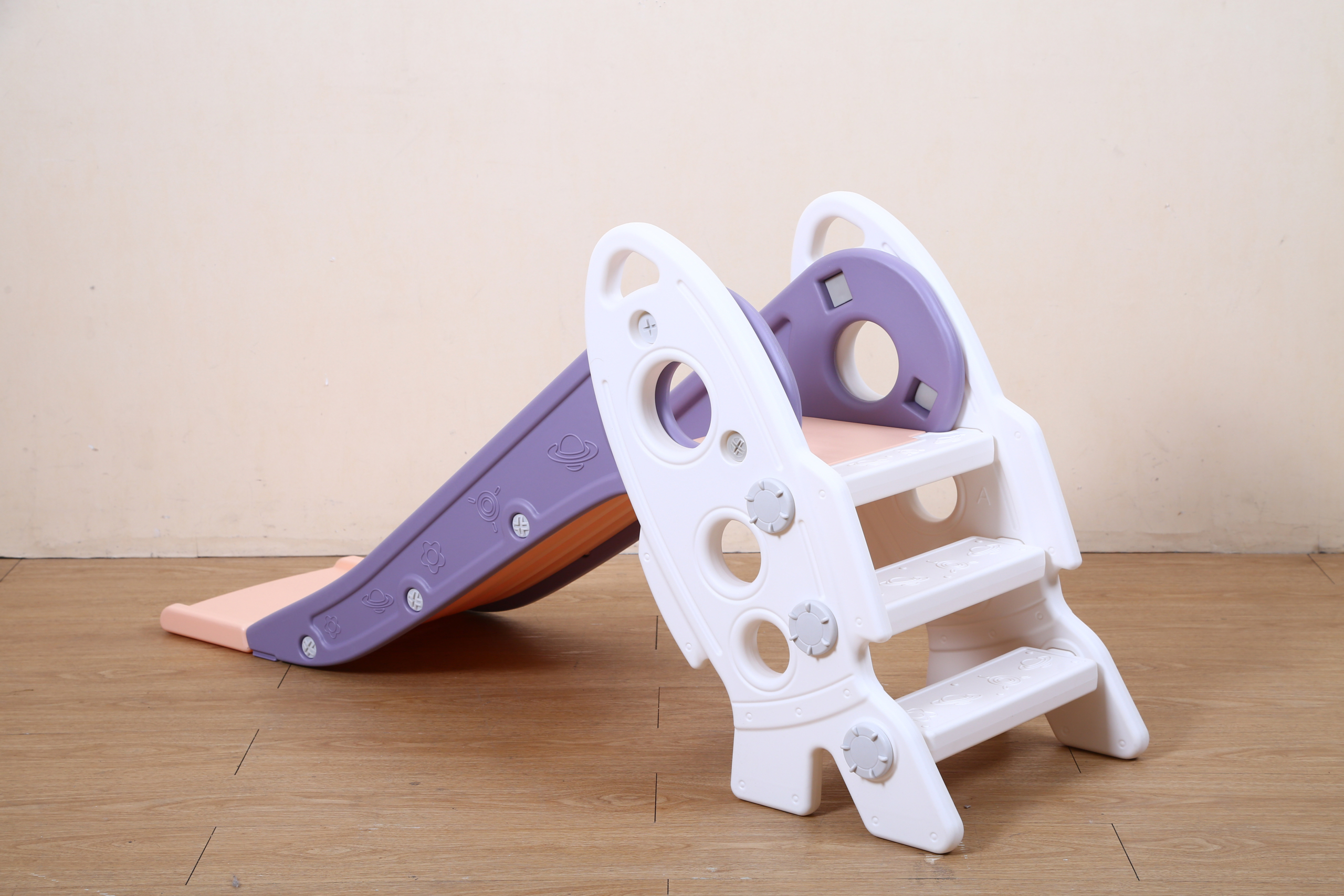
1. Match the slide to your child’s age and size
For children under two, keep the platform low (roughly 60 cm or less) and the slope gentle. A toddler should be able to sit down at the top and put both feet on the slide before letting go. From about two to five years old, a slide up to around 1 to 1.2 m is fine, provided the base is stable. The simple test: if your child has to be lifted onto the platform, the slide is too big for now. Do not treat a slide that a child cannot reach as the safer option either. Children climb what they cannot reach by dragging over a box or a chair.
2. Choose a soft, level landing surface
Grass, rubber tiles or a dense play mat all work well. Do not set a slide directly on tile, concrete or bare wood, and extend the surface at least a metre past the end of the slide: most injuries happen in the run-out zone, not on the slide itself. The ground also needs to be level, because a slide on a slope drifts and tips as a child shifts weight.
3. Secure the base before the first slide
Once assembled, push the slide firmly at the top of the rail, sideways and backwards. If it lifts, tilts, or walks across the floor, it is not ready to use. A wider or extended base helps, and anchoring is worth the effort outdoors. Any wobble means stop and re-check the assembly, not slide more gently.
4. Keep the climbing side and the run-out clear
Store other toys away from the base of the ladder and past the end of the slide. A ball or a ride-on toy in the landing area is what turns a normal slide into a fall. Leave a clear path of about a metre on every side.
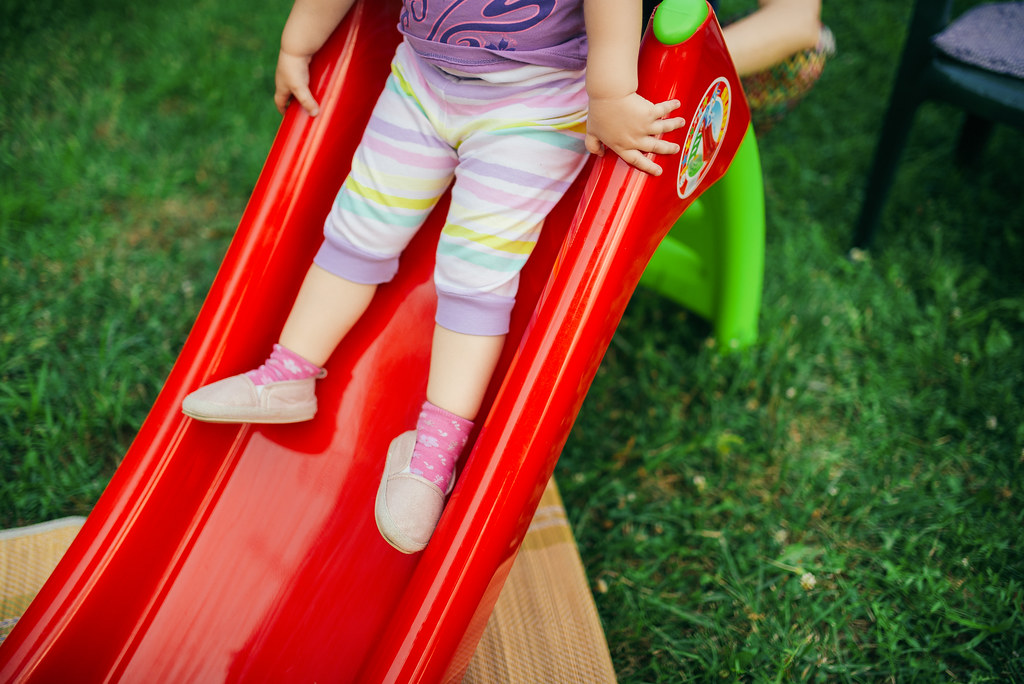
5. Dress for sliding, not for the weather
Remove scarves, necklaces and anything with drawstrings. A hood cord or a loose scarf can catch on a rail or a gap at the top of a slide, so it is a strangulation risk. Soft shoes with grip or bare feet are both fine; skip hard soles, which slip on the slide and produce a fast, uncontrolled landing.
6. One child at a time, sitting up, feet first
The rule that prevents most collisions is simple: the next child waits at the bottom until the one on the slide is standing up and clear. Teach children to sit at the top, go down feet first, and never slide head first, backwards, or in a chain. Ban walking up the slide early, too: it puts a child where the next slider cannot see them.
7. Supervise by age, then step back gradually
Children under three need an adult within arm’s reach the whole time. From three to five, stay in the room or the garden and keep watching, but let them climb. After five, a quick check-in is usually enough. Supervision is not about hovering; it is about catching the one moment when a child tries something new.
8. Run a two-minute check every week
Walk around the slide and look for the things that fail quietly: loose bolts, cracks in plastic, splinters on wood, burrs on metal, and brittle plastic after a hot summer. Re-check that the slide still sits level. If a part is cracked, take the slide out of use until it is repaired or replaced — a cracked panel can fail under a child’s full weight.
The short version
A safe home slide setup is not complicated: the right size, a soft run-out zone, a base that does not move, clear space around it, sensible clothing, one child at a time, and a quick weekly look. Do those things and a slide stays what it should be, one of the best ways for a young child to build balance and confidence. For more on why sliding matters for development, see our notes on the benefits of slides for children and on climbing toys for toddlers.
Safety reminders are not a reason to skip play. They are the reason children can play freely, and parents can relax while they do it.
发表评论
Want to join the discussion?Feel free to contribute!