

LC vs T/T vs Platform Escrow: Choosing Payment Terms for Play Equipment Orders
LC vs T/T vs Platform Escrow: Choosing Payment Terms for Play Equipment Orders
Match the payment method to the order value rather than to habit. Under US$10,000, run the order through platform escrow. Between US$10,000 and US$100,000, pay 30% by T/T and the balance against a passed pre-shipment inspection and a bill of lading copy. Above US$100,000, or on a first order from a factory you have not audited, use an irrevocable letter of credit at sight so the bank releases money only against compliant documents. Escrow buys mediation, T/T buys speed and low cost, and an L/C buys bank control over dates and paperwork. Each one covers a different risk.
Most importers of slides, soft play and playground structures use all three methods, on different orders. The table below is the decision rule; the sections after it explain what each method costs and where it breaks. 
The decision rule by order size
| Situation | Method | What it protects | What to watch |
|---|---|---|---|
| Samples, tooling deposits, orders under US$10,000 | Platform escrow | Money held until agreed milestones are met | Only orders paid inside the platform are covered |
| US$10,000–100,000 with a factory you have inspected | T/T 30% deposit, 70% against B/L copy | Cash flow plus a final quality gate | Inspection must pass before the balance leaves |
| US$10,000–100,000 with a new supplier | Escrow, or T/T 20/80 with third-party inspection | Money and quality while trust is thin | Written claim window and an agreed specification |
| Above US$100,000, or custom moulds | Irrevocable L/C at sight | Bank control over documents and shipment dates | Every LC field must match the invoice exactly |
| Repeat orders with two years of clean history | T/T 40/60 or 30-day open account | Speed and working capital | Keep the same inspection sampling plan |
1. T/T: the default for mid-sized orders
Telegraphic transfer is a plain bank transfer, costing roughly US$25–50 and settling in one to three working days. The deposit is not a courtesy fee: it funds raw material, mould time and the first production run, which is why factories ask for it. The balance is where your leverage sits, and it should buy a document rather than a promise — a B/L copy issued after a pre-shipment inspection has passed.
Two habits make T/T safer: have the inspection company send the report to you rather than only to the factory, and check the container number on the B/L copy against the packing list before releasing the balance. A demand for 100% in advance on a first order is not a payment term, it is a warning.
2. What a letter of credit actually buys
An L/C does not inspect quality. It checks documents against the terms you wrote and pays on presentation, so a compliant set of papers gets paid even if the vessel is late, while a non-compliant set can be refused even when the goods are perfect. On a US$150,000 order: shipment date, quantity tolerance, port pair and inspection certificate all become conditions the factory must satisfy before money moves. Pricing runs 0.1–0.5% of order value with a minimum near US$150–300, plus bank charges, so it only pays on larger orders.
The documents carry the mechanism, so agree the list before the LC is opened:
| Document | Issued by | What the bank checks |
|---|---|---|
| Commercial invoice | Supplier | Amount, goods description and Incoterm match the LC word for word |
| Packing list | Supplier | Carton count, weights and dimensions per container |
| Bill of lading, full set, clean on board | Shipping line | Port pair, shipment date, consignee, freight terms |
| Certificate of origin | Chamber of commerce or customs | Origin and the form needed for preferential duty |
| Inspection certificate | SGS, BV or equivalent | AQL result and the quantity actually passed |
| Test reports (CE, EN 71, ASTM) | Accredited laboratory | Report numbers referenced in the LC |
| Insurance certificate | Insurer | Coverage of at least 110% of invoice value under CIF |
3. Where letters of credit go wrong
Almost every refusal is clerical rather than commercial. The invoice reads “playground slide set” while the LC says “children’s slide combination”. The shipment leaves two days after the latest shipment date. A partial shipment clause was left out, but the order needs two 40HQ containers. Each becomes an amendment or a refused set of documents, and both cost days you do not get back. 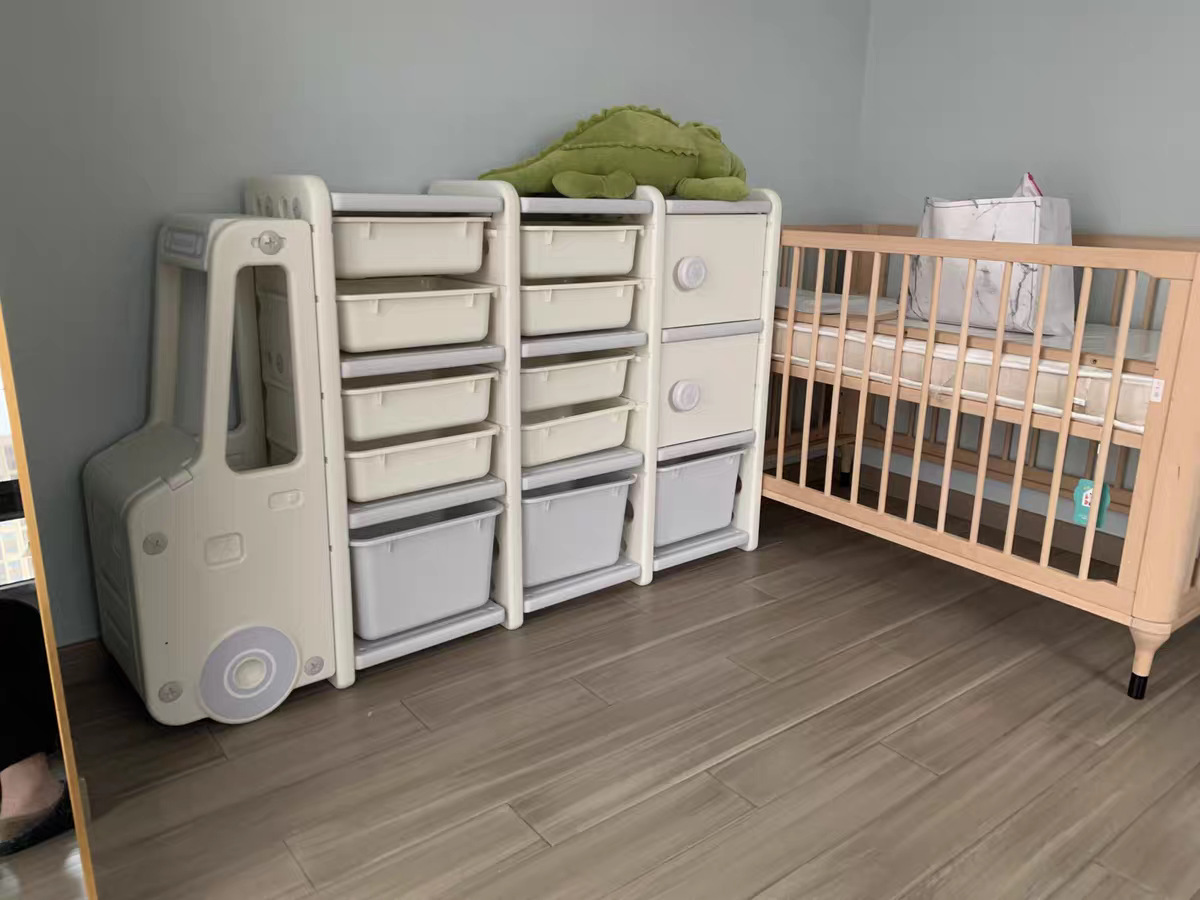
| Discrepancy | Usual cause | Cost of fixing |
|---|---|---|
| Latest shipment date missed | Production slipped against the LC expiry | Amendment fee plus a later vessel |
| Description mismatch | Invoice wording differs from the LC field | Documents refused, cargo sits at the port |
| Partial shipment not allowed | Order needs two containers | Amendment before the second container loads |
| Presentation window missed | Documents arrive after the 21-day window | Discount or bank indemnity to get paid |
| Soft clause | Payment conditional on a buyer-issued certificate | Protection disappears; remove it before signing |
4. Platform escrow: narrow, but genuinely useful
Escrow suits small orders and the first conversation with a supplier found online. The platform holds the money, and if the goods never ship or fail the agreed specification you can open a claim while payment is frozen. The limits are real: coverage applies only to orders paid inside the platform, a claim needs evidence — approved sample, specification sheet, inspection report, agreed delivery date — and the window closes, often around 30 days after delivery.
Escrow mediates; it does not inspect. Above a sample order, a third-party inspection at roughly US$300–500 is the cheapest insurance in the deal, and that report is what makes an escrow claim arguable.
5. Hybrid structures that work in practice
Buyers rarely use one method per project. Three combinations hold up:
Deposit by T/T, balance by L/C. The deposit covers tooling on a custom slide or play structure, and the L/C covers the large final payment without tying up the full amount months ahead.
L/C for the equipment, T/T for spares. Spare parts are too small to justify LC charges; keep them on a separate proforma with simple transfer terms.
Escrow for samples, T/T for production. Pay the sample and mould deposit through the platform, then move to a 30/70 transfer once the sample is approved in writing.
6. Paperwork rules that prevent most losses
Quote and invoice in one currency and keep it. The account holder on the proforma must match the contracting company exactly; a late email announcing new bank details is fraud until confirmed through a second channel and a bank letter. Keep the SWIFT confirmation for every transfer, file test reports with the shipping documents, and check the invoice number against the proforma before the bank sees it. None of this is exotic — it is the difference between an order that closes and one that becomes a claim.
For the wider sequence, start with our overview of payment terms and trade assurance, then read how to write the purchase contract, what the HS code and tariff add at the border, and how an AQL inspection is scored.
发表评论
Want to join the discussion?Feel free to contribute!